Review / Blitz in the East: The Scorched Earth Expansion
By Paul Chernoff
Blitz in the East: Scorched Earth (BitE:SE) was released with Blitz in the East (BitE), the latest game from Vento Nuovo (VN) games of Italy. It adds logistics, cards, and counters.

BitE:SC adds more fun and realism to BitE while adding only a little more complexity. The new cards provide more options for both sides. The logistics add costs for converting rail gauges, moving factories to Siberia, and destroying resources as the other side occupies them. The Fall Blau scenarios provides a 1942 start to the game and the Balkans Pacified scenarios gives an advantage to the Axis, handy if you have problems playing the Axis.
This review is for those who either have BitE and are considering the expansion or for those who haven’t played BitE but want to know more about the system. BitE:SC is unique in that it was released at the same time as BitE. It isn’t an afterthought nor a correction to the original nor does it contain any errata. It expands the richness of BitE with adding only a small amount of complexity.
What do you get over the base game? You get counters that support new rules and make the game easier to manager. You get a few more balls to juggle and decisions to make. You get 26 more cards which add to the play of the game. And some more scenarios for either a strong Axis or a game starting in 1942. Is the expansion necessary to enjoy BitE? No, but it makes it more fun.
Logistics
A major addition to BitE are more logistics tools. Both sides have to deal with rail conversion as they advance. Retreating forces can attempt to destroy infrastructure, denying them to the enemy. And the Soviets can move some factories to Siberia in order to deny them to the Soviets and maintain production.
Scorched Earth
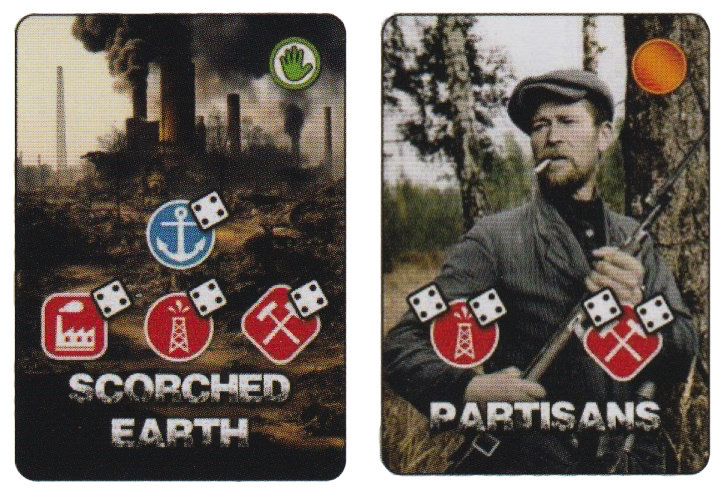
Once a side plays the Scorched Earth card the opposing player has to roll a die to see if infrastructure is usable when they first enter a major port, factory, mining, or oilfield hex. The Soviets start with a Scorched Earth card in their hand, the Axis will receive their card in 1944. The Soviet card requires a roll of 4+ to ruin a hex, the Axis a 5+. The Soviets will also receive a Partisans card in 1941 which will allow them to roll 2 dice on a Scorched Earth check. If either die is 4 or greater they have damaged the infrastructure. Since the Soviets start the game with the Scorched Earth card the Soviet play will have to consider in 1941 whether to play that card or another Strategic Card in the early turns.
Railyards
Since the Axis and the Soviets used different rail gauges a captured Railyard needs to be converted to the proper gauge. An exception is Riga which used the same gauge as the Axis.
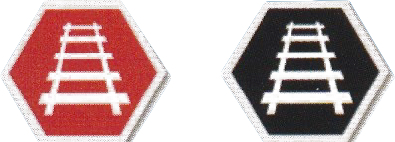
There are multiple benefits to converting a Railyard. The first is that it can be used in Strategic Rail Movement (SRM). The next is an important change to SRM rules. In the original game each side could use SRM for one unit per turn. In the expansion each side can use SRM for every 10 Railyards it controls. If a side drops below 10 Railyards it loses SRM. The Railyards must be in supply and able to connect with the other Railyards via overland movement. Thus the Finnish Railyard isn’t counted unless the Axis can capture Leningrad.
Railyards are also essential for unit Replenishment and Upgrades. Only units within 3 hexes of a Railyard can be promoted. So more strategic decisions for both sides.
Evacuated Factories
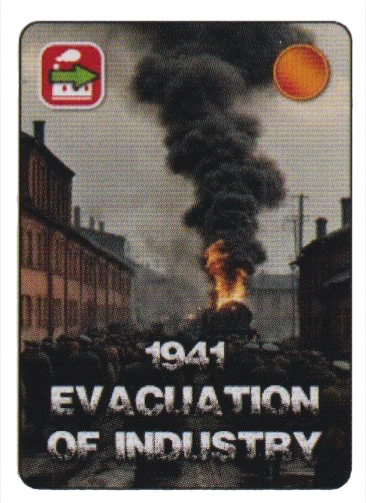
The Soviets can evacuate factories if they play the 1941 Evacuation of Industry card in 1941. Once played the Soviets can use a SRM to evacuate a Factory to Siberia. The Soviets lose the use of the Factory for a term. Factory evacuation can only happen in 1941.

New Cards
The cards provide a physical mechanism that is an alternative to simply adding more rules. Some cards are associated with new rules, but you only need to read the rules as the cards are played. Plus in the BitE:SE the cards add some randomness.
New strategic decisions revolve around the cards. Before you draw your 1st card for the turn you have decide if you want to draw 1 or 2 cards, the 2nd card costing 1 Goods. The timing of some cards is critical. For example, the Soviet OKH Intervenes card is valuable only if played before the Axis enters either Moscow and/or Rostov. Each year is 6 turns and some years have more than 6 cards for a side. If a year’s cards are not used up by the end of the year they are then mixed in with the next year’s cards.
Despite the extra cards players are still limited to playing a single Strategic and Tactical card per turn. I’ve noticed that the Soviets will build up cards in their hand and have to pick which Strategic cards they want to play each turn. So more decisions.
Some of the new cards support the new Logistics rules. Others cover events occurring elsewhere in the ETO, strategic warfare, and other conditions. Here is a sampling of the new cards.
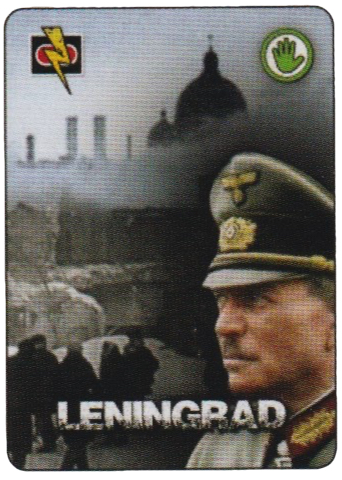
- The Leningrad card allows the Axis player to replace Moscow with Leningrad as an Axis goal in 1941. If the Soviets play the OKH Intervenes card and Leningrad isn't captured then the Axis loses Guderian. Playing this card is a gutsy move.
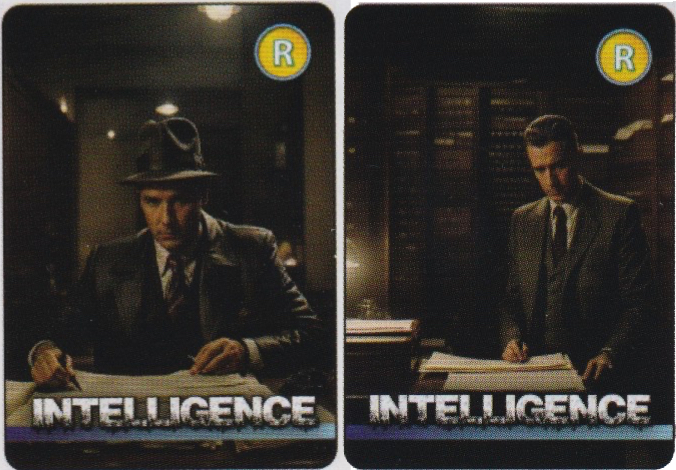
- Each side gets an Intelligence card that allows it to steal a card from the other players hand or to prevent such a steal.
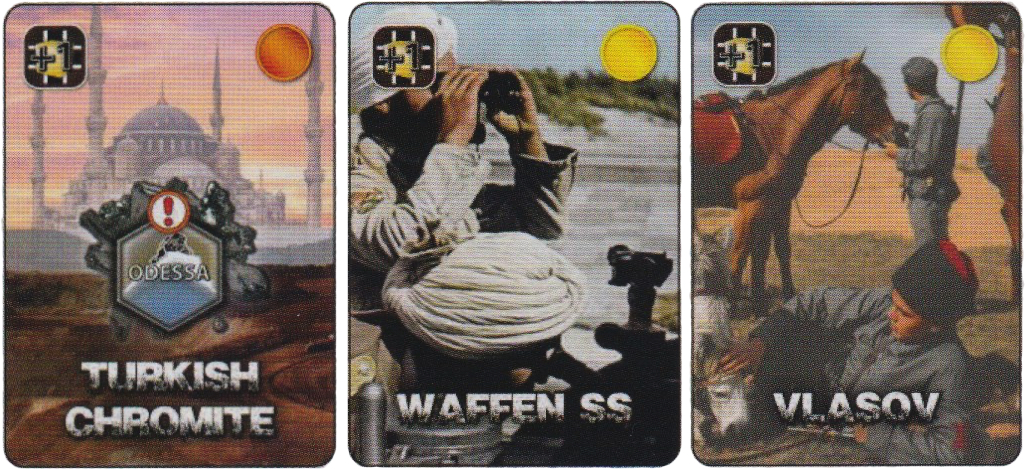
- There are various cards which increase Axis production.
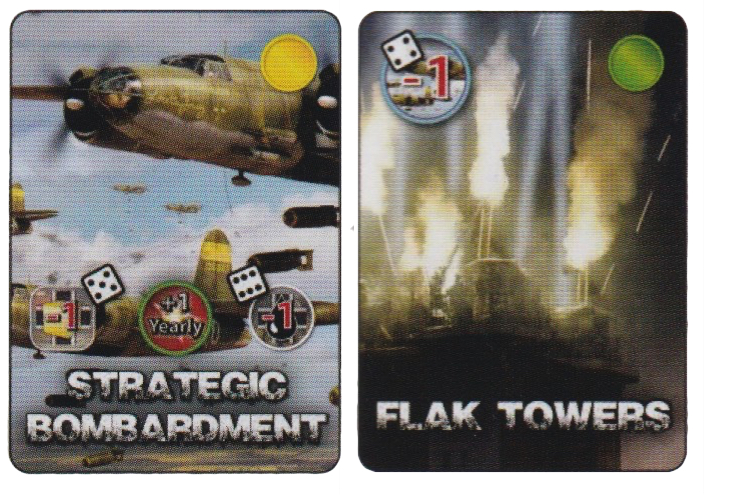
- Axis production is hurt if the Soviet Strategic Bombardment card is played.This card represents US and British strategic boming and not Soviet bombers. The Axis can protect itself with Flak Towers.
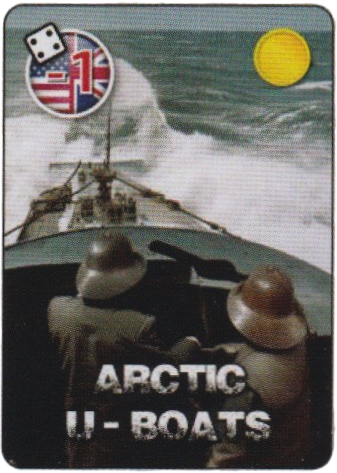
- Arctic U-Boats challenges the Lend Lease program benefits.
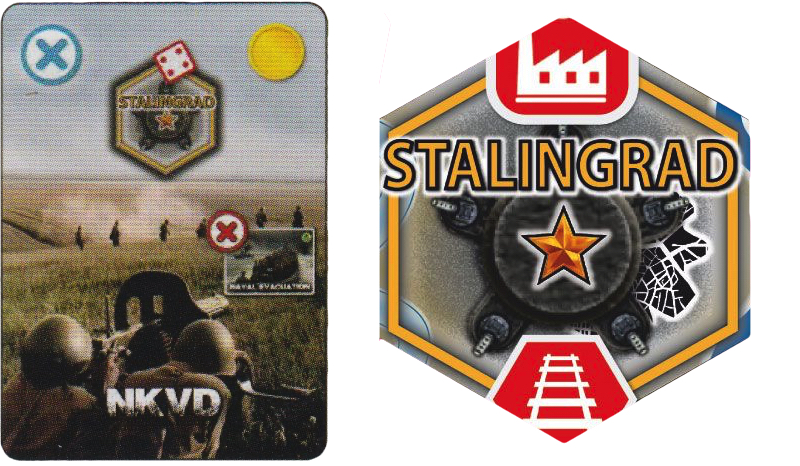
- The NKVD strategic card is one of the more interesting ones. It provides the Soviets a 50% chance of converting Stalingrad into a Fortress. In exchange Soviet forces may never voluntarily retreat in combat, perform a naval evacuation, and if combat results call for a retreat at 2:1 and 3:1 odds the Soviet Ground Unit suffers one additional hit instead. See Stalingrad Fortress City counter below.
New Counters
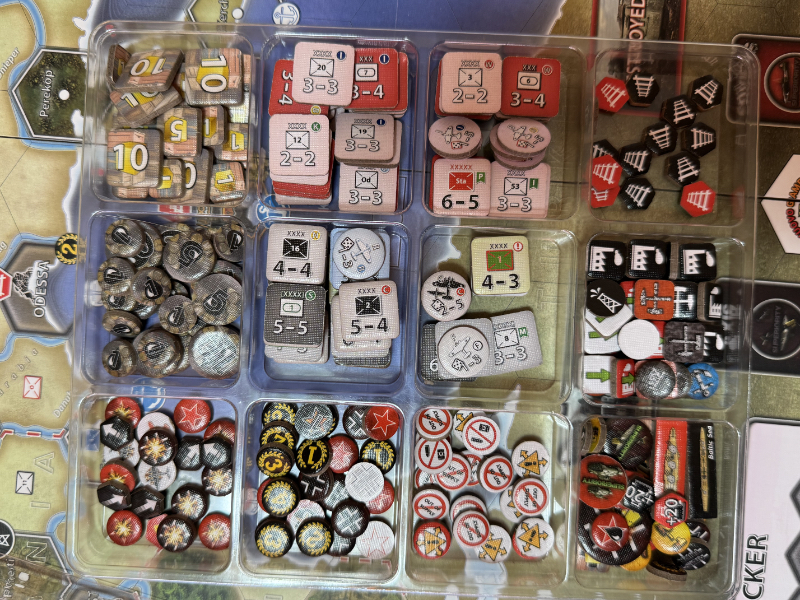
About 1/2 of the new counters support new rules, the other counters just provide coins for tracking oil and goods.
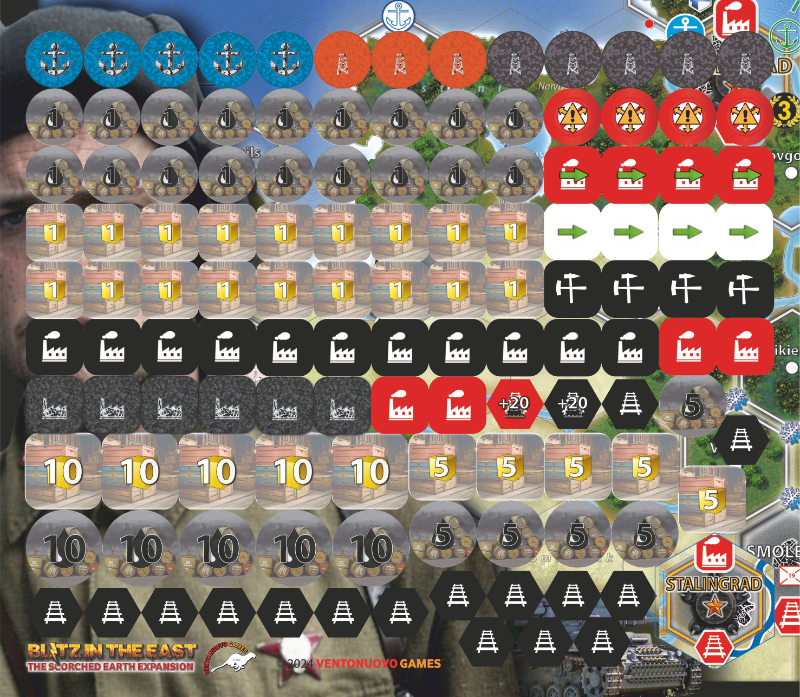
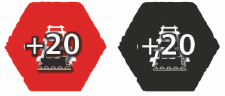
There are 2 new counters for the Production Tracker. These show the number of usable Railyards owned by each player.
Disabled counters for ports, oilfields, factories, and mines accompany the new logistics rules. They are replaced with appropriate functioning counters once fixed.

Evacuated factory counters with just the green arrows and placed on Soviet cities where the factories that have been moved to Siberia. The green arrows imposed on a red factory are placed in Siberia once the factories are on-line.
The large Stalingrad Fortress City hexagonal counter is to be placed if the Soviet plays the NKVD card and succeeds in converting Stalingrad into a Fortress hex. 50% chance.
Emanuele Santandrea told me that the Oil and Goods counters are simply a substitute for tracking these resources on the Production Tracker. He simply prefers the feel of having coins that he can hold in his hands over moving the tracker counters. I agree, sometimes I would move the wrong counter on the Production Tracker, I found the coins easier to handle. This is purely a personal preference, I’m sure that some players will prefer not using the coins. Just a nice extra.

The new Out of Supply (OOS) and OOS and Disorganized counters an aid that can be used without the expansion rules. The OOS side is the same as the original OOS counters. The side with the yield sign and the red circle behind it simply means that a unit is both OOS and disorganized.
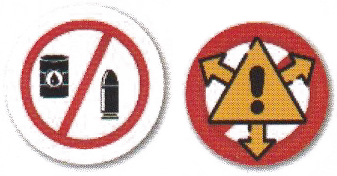
I use the new counters even if I am playing BitE without the expansion rules or cards. The factory, mining, oil, and Railyard counters make it easier to track which hexes have been conquered. And they look cool.

And how many counters. All of these counters fit in a Cube4Me 4x3 counter holder.
New Scenarios
The 2 new scenarios add some variation to BitE. Each situation is offered as a 4 turn and campaign game. The victory conditions of the new scenarios are very similar to that of the BitE campaign game.
Fall Blau: Starting the Game in 1942
As much fun as rolling over the Soviets in 1941, sometimes you just want to start Blitz in the East in the Spring of 1942. These 2 scenarios provide a short game ending in 1942 and a campaign game that takes you through the end of 1945.
For the short game the Axis needs to control 3 of these cities by the end of the game or 4 of the cities at the end of any player turn: Sevastopol, Moscow, Leningrad, Baku, and Stalingrad.
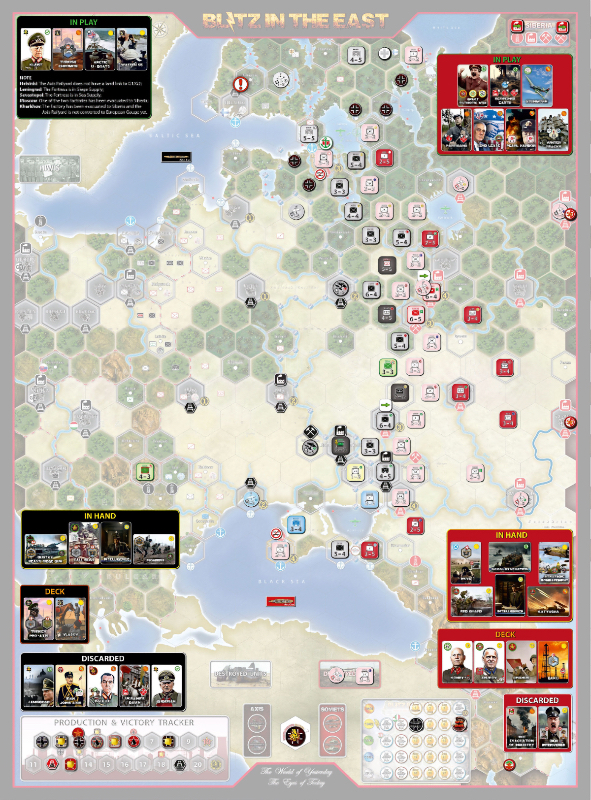
The setup is displayed in the middle spread of the rules. Every counter location, rail conversion, and card in ply, in hand, in the deck, and discarded are shown. This makes setup fairly simple.
Balkans Pacified
Balkans Pacified scenarios are essentially the same as scenarios 2 and 3 except that the Axis convinced Greece and Yugoslavia to join the Axis. The two scenarios are the short one that only covers 1941 and a campaign scenario.
There are just a few changes from scenarios 2 and 3. The German 1st Panzer Army is deployed at full strength. This gives it the ability to Blitz on turn 1. The Soviet Tito card is removed from the game. The Axis starts with the Fallschirmjäger Tactical Card in its hand because the German paratroopers didn’t have to invade Crete. This enables to Axis to ignore any river penalties for 1 attack a turn, which is especially useful in attacking Leningrad.
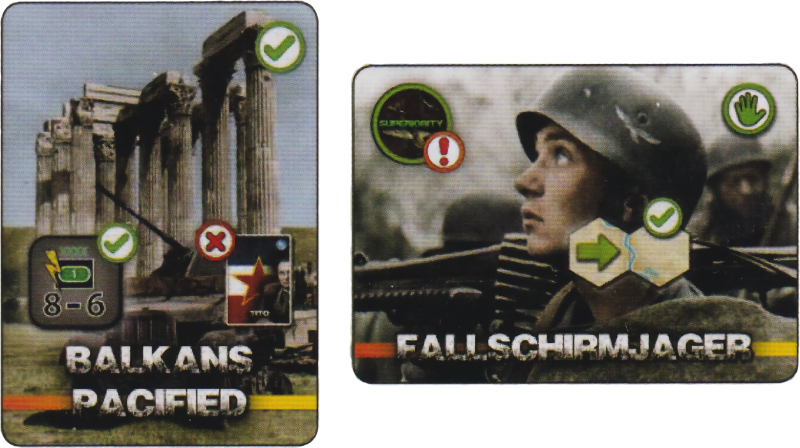
Balkans Pacified is a nice scenario if you are finding playing the Axis to be too difficult. Having a 2nd Blitz capable army makes the Axis able to do more on turn 1. Paratroopers helps with those pesky non-frozen rivers.
More Scenarios
Emanuele is hoping to post more scenarios on the web in the future.
Conclusions
The Scorched Earth expansiont o Blitz in the East is a worthwhile edition. It adds to the game without changing it fundamentally. If you enjoy BitE and plan on replaying it—many of us have too many games to replay everything—I recommend this expansion. If you are thinking of buying BitE consider buying BitE and BitE:SE as a bundle. I'm somewhat on the fence on this recommendation just because of the price of games and BitE itself isn't inexpensive so there is risk in putting more money upfront in hopes of long term savings.
Thanks to Emanuele Santandrea for spending time with me on two video conversations. He answered my few questions about the rules. The discussions help me write a better review and understanding of BitE and the expansion. He also spend a fair amount of time showing me his next game, The Lions of El Alamein and asking my opinion. El Alamein will be a return to block wargaming but with counters to be used as assets and markers.
During the workday Paul Chernoff is Director of IT for Washingtonian Media, which has nothing to do with the gaming world. In his spare time Paul plays games, does rule layout work, and has started writing game reviews. He can be contacted at
If you'd like to buy the game from Noble Knight and support Pushing Cardboard at the same time, click here!
If you'd like to order trays, I'm an affiliate at Cube4ME


Add comment